Monday, March 25, 2013

Botany Rules 1: Writing Plant Common Names and English Names


August wildflowers, Victoria, Australia
    We have a variety of conventions for writing about plants that aren’t particularly obvious, probably because they lie at the intersection of science, language rules and everyday speech. These frequently mystify and frustrate people who otherwise love plants. I am planning posts that explain the rules as I know them.  This one is about writing plant names.
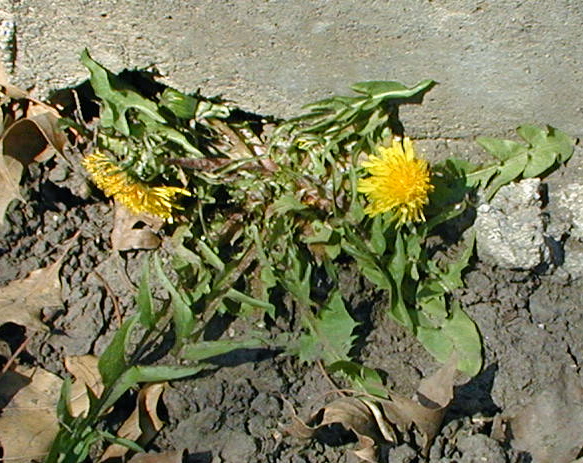
dandelions
dandelion
   Most plants have several names--minimally an English common name and a scientific name, but possibly several common names in each of several languages. Thus, the same plant is called: dandelion (English common name), Taraxacum officinale (scientific name)  dent-de-lion, (French common name), achicoria silvestre (Spanish common name) and maskros (Swedish common name). Of course it also has a Dutch, Flemish, German, Italian--you get the picture--
common name as well. In addition, many languages have more than one common name for dandelions, plant books in English might mention blowball, cankerwort, wild endive and piss-i-beds, in Spanish amargon, diente de leon, and taraxacon. I’d say all of those are the plant’s real name:  if, when you use a name, the person to whom you are speaking recognizes it, then that’s the whole point.

Rules for writing common names: modern English doesn’t capitalize common names of plants (or animals, tho bird specialists sometimes do capitalize bird common names).  The plant common name has to conform to the rules of English, however, so if there’s a proper noun in the common name, it must be capitalized. 

Monday, March 18, 2013

Hawaiian Plants: Names in Hawaiian, Names in Latin, Names in English


View from Richardson Beach, Hilo, Hawaii
    Despite being part of the United States, Hawaiian plants have strong ties to Asia. The Asian connection suggests interesting comparisons to plants of the Americas. What plant was used to dye kapa purple? Are those almonds on the beach? 
Fruits of the tropical almond, Terminalia catappa, Mauna Kea Beach, Hawaii
 almonds? on Mauna Kea Beach, Hawaii
    Does the Hawaiian poppy have yellow sap like the similar-looking plant of Colorado?


    To look up answers to these questions I needed to know the name of the plant.

Plant named in Hawaiian
Plant identified with Hawaiian name
    For me, plant names let people talk about plants.  As a serious botanist, I would like to use whatever name the person to whom I’m talking uses.  I long ago decided I had to be bi-lingual, using common names with some people and scientific names with others.  Common names are local names. Even if we got everyone in the English-speaking world to agree to use the same common names, there would be different common names for the same plant in French, German, Polish, Arabic...or Hawaiian.

        One plunges Hawaiian plant identification to find they are called pohuehue, kukui, liliko’i...


      Scientific names were created to cut through the confusion resulting from multiple languages. The idea is that each species has only one scientific name. The scientific name is in Latin for historic reasons--when the system was set up, in the 1750‘s, Latin was the language that unified educated Europeans. The system works today.

Monday, March 11, 2013

Visiting Hawaii


   I’m just back from a visit to Hawaii.  For me, Hawaii is the Big Island. I lived there in 1981-2, doing plant ecology research. I’m a tourist these days, but feel like a former resident when I visit. 
Colorado in March

   The first thing that struck me was the colors. We left a Colorado that was powder blue, white and light brown.

    The Hilo side of the Big Island is green--toweringly green, diversely green, envelopingly green--the sky deep blue with white clouds, the ocean midnight blue.
Hilo area, March

   
Kona area, March


     The Kona side is green where they water, but the natural landscape is shades of brown and black with the occasional reddish highlight and vaguely green shrubs with tiny leaves under an azure sky.


Waimea (Kamuela) in March
     This trip we stayed in Waimea (also called Kamuela to distinguish it from several other Waimeas) at 2500’ where the road from Kona to Hilo goes around the shoulders of snowcapped Mauna Kea. That area is the intense light green of cattle pastures, ankle deep in tropical grasses with the gray green of towering ironwood trees (Casuarina equistifolia) and, most of the time we were there, gray skies with wind-driven drizzle.         

     The prevailing winds, causing unequal rainfall, make these stark contrasts.  None of these areas gets frost. Hilo is the wettest city in the United States with about 125” of rain a year. Kona is the vacation destination because its annual rainfall is less than 15”. With irrigation they have beautiful golf courses and flowering shrubs. 

      For the midwinter botanist, it was a joy to be catapulted back into midsummer. Hawaii’s tomatoes were locally vine-ripened.  The oranges and papayas came off a nearby tree. Trees and shrubs were flowering.


Monday, February 25, 2013

Plant Confusions: Garden Sage and Sagebrush are Different


garden sage, Salvia officinalis
Artemisia tridentata, big sagebrush
big sagebrush, Artemisia tridentata
Sometimes two plants with the same name are quite different. 
     I still remember my surprise, years ago, when I realized garden sage and prairie sages were unrelated.
    The culinary herb, sage, sometimes called garden sage for clarity, Salvia officinalis, is from Europe. Although it doesn’t taste or smell minty, you can call it a mint because it is in the mint family, Lamiaceae. It is related to a host of important culinary herbs, not just clary sage, spearmint and peppermint, but also plants as diverse as lemon balm, catnip and oregano. 
garden sage with flowers


Wednesday, February 20, 2013

Related Plants: Camellia and Tea


Camellia variety, Pink Perfection
    There have been times when plant relationships surprised me. The fact that tea is a camellia, or one kind of camellia gives us tea, whichever way you want to look at it, is one of them.

   My father, when he retired to Florida, became a camellia grower, officer in the local Camellia Society and judge at camellia flower shows. Consequently I learned a lot about camellias and certainly admired the flowers.    

    Camellia is a genus of shrubs, classified in the plant family Theaceae, native to east and southeast Asia, especially China and Japan. They have attractive flowers, and have been bred and hybridized to create great floral diversity. See some of the diversity on http://www.americancamellias.org/default.aspx 

     Camellias have been in cultivation in China and Japan for centuries.  Most of the varieties cultivated for their flowers are Camellia japonica,  although Camellia reticulata (from China) and C. sassanqua (from Japan) have contributed important varieties.

Friday, February 15, 2013

Plant Story: Not Always Just Plain Vanilla

     Good vanilla is one of my favorite flavors, and the idea of "plain vanilla," vanilla as the no-flavor flavor, has always been somehow annoying.  And it wasn't always the case.

Vanilla orchid
The vanilla orchid is the plant in the middle,
hanging down over the tree branch. (In the
Conservatory at the Smithsonian in
Washington D.C.)
   Vanilla is native to the Americas and although probably in use for millennia there, it only reached Europe after 1492. At that time it was a rare and highly desirable flavor.


   Vanilla comes from “beans,” long thin bean-like pods, but vanilla is not at all a bean (legume, plant family Fabaceae), but an orchid (plant family Orchidaceae). In fact, it is the only orchid used as a food, or used by commerce in any other way than as ornamentals (flowers) even though there are more species of orchids than species in any other plant family, legumes and grasses included.  

   Vanilla is a climbing vine with fleshy leaves longer than my hand, but 2-3 fingers wide. We grew a vanilla orchid in the greenhouse at the University of Nebraska. It climbed up to the ceiling. Then its stem connecting it to the pot broke, so the plant was hanging from the wall and ceiling without being rooted in soil at all. It lived like that for years. And that was fine until we wanted to move it...which is of course one function of flowerpots, mobility.


      The flowers of the vanilla orchid are cream-colored recognizable orchid flowers ( vanilla flowers on Google).  The fruit develops as long dark pods.

Monday, February 4, 2013

Plants and History, Mostly

  I retired, having been a professor of biology for more than 30 years. But work shapes you in ways you didn't consider. So, for example, "publish or perish," usually described as an evil thing, remains part of my wiring. "It is not done until it is published"was a rule I lived by and even though I no longer need to publish, I still want to share what I've learned. Likewise, the photos I took were used in publishing or teaching. I still take photos but they just accumulate in files.

  Thus, my motivation for this blog is to see if I can satisfy my need to share good stories and interesting  pictures via this medium.

  What I plan is to write about plants--their quirks, their uses, their history--in short, their stories.  Two very short examples:

     Vanilla, one of my favorite flavors, comes from an orchid. Although there are more species of orchids than species in any other plant family, vanilla is the only orchid that is commercially produced (for anything besides beautiful flowers), and so a very special orchid.

  My father retired to Florida and became a serious camellia grower.  I too like camellias but cannot grow them in Colorado because they cannot survive much frost. Consequently in my travels, I note and enjoy camellias wherever I see them.

    In Japan I learned that while the Japanese have native camellias and certainly grow them, the samurai disliked them because the fallen flowers reminded them too much of beheaded samurai. That has certainly changed the way I look at camellias.