Sunday, October 28, 2018

Plant Story--Papaya, Tropical American Fruit

papayas for sale
You see them sometimes in northern markets, green-orange fruits looking like small footballs. And I presume sometimes they taste pretty good.

But pretty good is not how they taste in Florida or Hawaii or Costa Rica. A really fresh papaya is a marvelous thing.

a bowl of papaya
a dish of fresh papaya

Sunday, October 21, 2018

Plant Story--More on Prickly Pear Cacti, Flowers and Fruits

prickly pear cactus

Prickly pear cacti, genus Opuntia, are easily-recognized members of the cactus family (Cactaceae) with a very wide native range across the Americas. There are more than 150 species, native from southern Canada to Argentina and Chile. They are also called nopales (singular nopal).

Sunday, October 14, 2018

Plant Story--Prickly Pear Cacti, Wonderfully Spiny

prickly pear cactus, Opuntia, flowers

Cacti do not get a lot of appreciation. As a very visible, common cactus, that certainly applies to the prickly pears, Opuntia species. These plants are easily recognised, avoided and disliked.

Sunday, October 7, 2018

Visiting Colorado--Fall Mountain Scenes

Aspens in color, Rocky Mountains

It is fall in the Rockies. The aspen leaves are turning colors. As I write this in early October, Trail Ridge Road at the top of Rocky Mountain National Park is closed due to snow. It should reopen, but, clearly, it is winter now at 11,000 feet. Where I live, at 5,000 feet, we have not yet had a frost. As cold temperatures move down the mountains, aspen and other deciduous trees will change color and then lose their leaves at successively lower elevations. Lots of opportunity to enjoy the spectacle.


Sunday, September 30, 2018

Visiting Colorado--Loving Maroon Bells

Maroon Bells, near Aspen Colorado

Maroon Bells, three bell-shaped mountains near Aspen, Colorado, are ranked as one of the best places to see wildflowers and bright aspen leaves in the Rockies.

The place is beautiful. It is also being loved to death.

Sunday, September 23, 2018

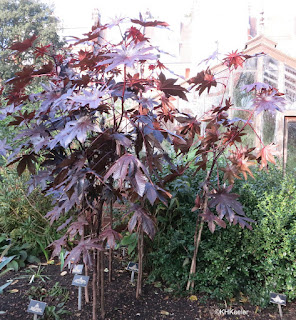
Plant Story--Castor, Tall, Beautiful and Deadly

castor, Ricinis communis
When I was a child, castor oil was a tonic commonly given to children. It was oily and we resisted.

In those days, I was told the plant that castor oil came from was called the castor bean. Although you still see it, the name castor bean is "out" today, because usually beans are plants in the pea family, legumes (Fabaceae) and castor, Ricinus communis, is a spurge, related to croton and poinsettia (Euphorbiaceae). You will see castor oil plant or just castor as we struggle to say it better.

You can see why the name: the seeds do look like beans.
Seeds of castor, Ricinis communis
Castor oil has been an important oil for millennia, but castor is a very poisonous plant.

Sunday, September 16, 2018

Gardens of Near Philadelphia, Pennsylvania


In 2016 I took a late summer garden tour of Philiadelphia and nearby areas with Road Scholar tours. I was born in New Jersey and spent my early years in Pennsylvania and central New York, but I've lived 49 years since in drier places, so I reveled in the greenness and the masses of bright flowers. This post celebrates the beauty of that region.