 |
Sempervivum tectorum, hens-and-chickens, aka Jupiter's beard
stonecrop family, Crassulaceae |
One widely-planted succulent (see
previous post) is the plant I grew up calling hens-and-chickens
Sempervivum tectorum (Crassulaceae, stonecrop family). These days the preferred common name seems to be houseleek. There are 34 genera and 1,400 species in the Crassulaceae, with 30 species of
Sempervivum and hundreds of
Sempervivum hybrids and cultivated varieties
. Sempervivum tectorum thus gets called the common houseleek, since you might want to call all the other sempervivums houseleeks too.
Native to Europe, the common houseleek has been grown in and around human settlements for millennia. Like many plants that are familiar to a lot of people, it has many common names. Frequently used in the U.S. are hens-and-chickens and common houseleek. More obscure common names are Aaron's rod, bullocks eye, Jupiter's beard, Thor's beard, syngreen, and a half dozen more (see
Wikipedia entry).
 |
Sempervivum tectorum rosette -
note thickness of leaf I broke |
The scientific name,
Sempervivum, means "live forever" (
semper = always,
vivum = living), as does the common name syngreen and its variants. This doubtless refers to the fact that uprooted plants can survive for weeks, living on their stored water. Pluck up a pansy (
Viola tricolor) or a dandelion (
Taraxacum officinale), with or without roots, and in hours they are wilted and in a day or two, dead. Do the same thing to a rosette of hens-and-chickens, and more than a week later you can stick it back in moist soil and it will recover. Try it!
This is the benefit of storing water the way a succulent does.
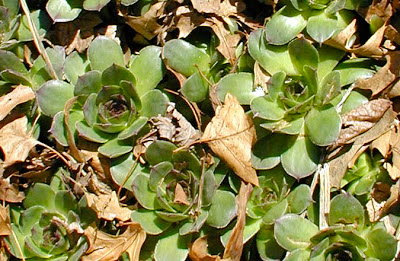
The hens-and-chickens common name follows from the growth form, where little clones are grow around the initial plant. (See picture below, but I don't have a really classic photo of hen with chickens.)
 |
hens-and-chickens in
rock garden in Colorado |
The
tectorum in
Sempervivum tectorum and the English names Jupiter's beard, Thor's beard and houseleek all refer to the plant's long association with lightning.
This is a story that seems very odd to us in the modern world.


