Trumpet creeper, also called trumpet vine, Campsis radicans (catalpa family, Bignoniaceae) has for years been one of my favorite plants. The flowers are spectacularl: large red tubes, classical hummingbird-pollinated shape. The tropics has many plants like this, but in New York and Ohio, trumpet vine stood out. In those areas, it was easy to recognize. Add to the red flowers, long leaves with five or more paired leaflets and one more leaflet at the tip and a woody base, and you see how I knew it when I saw it. And it had an easy common name, trumpet creeper, obvious and descriptive.
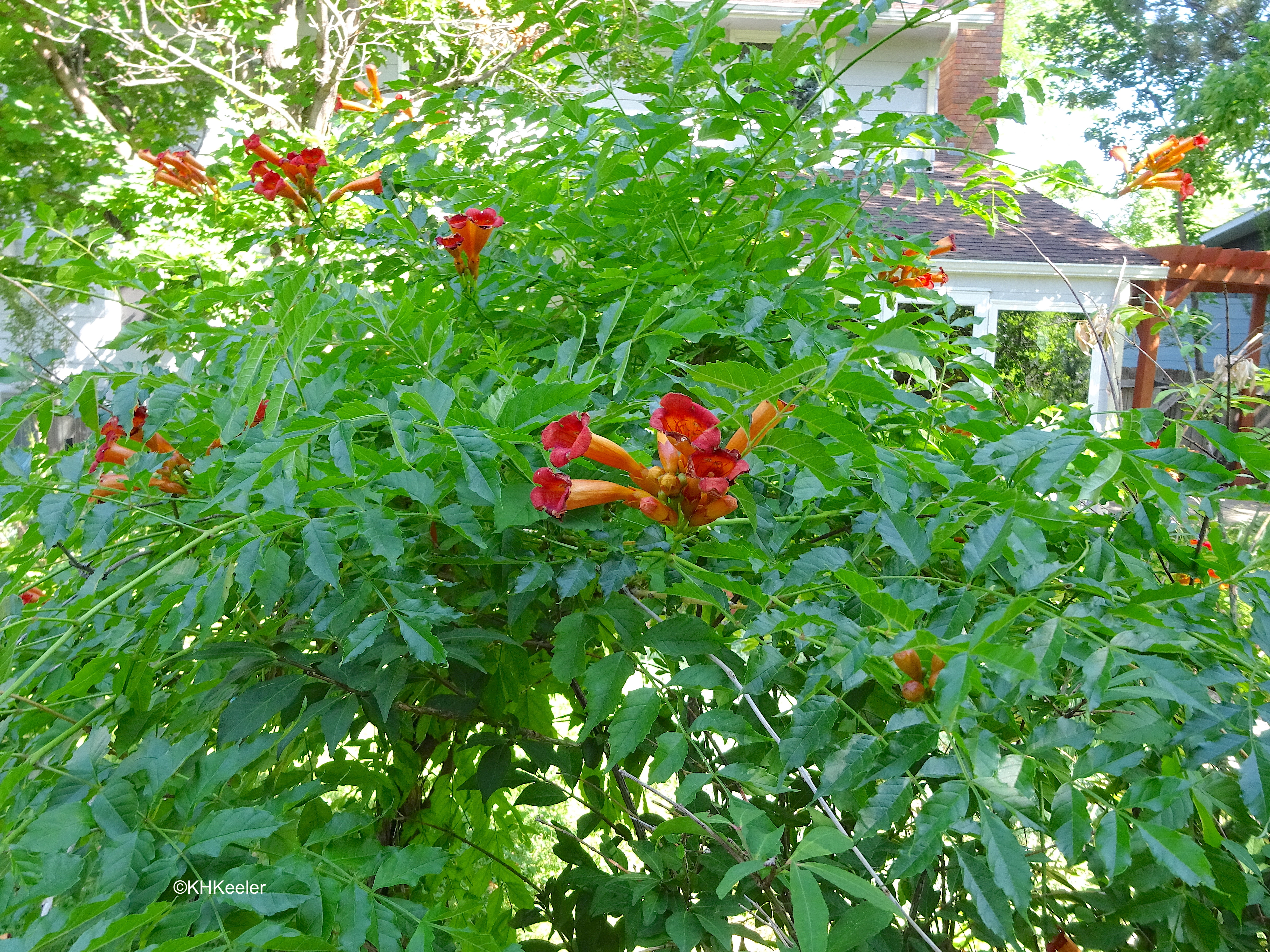
This big plant is native to the southeastern United States where it is a magnet for ruby-throated hummingbirds, but also for long-tongued native bees and moths. It attracts other flower visitors, like smaller bees, and perhaps they sometimes pollinate. For bees getting nectar is a project since they have to climb into each flower, not just hover in front of it like a hummingbird. The nectar is so good that both the Northern Oriole and Orchard Oriole feed from the flowers.
