Plant names are endlessly fascinating to me. Especially when I learn they don't tell me what I thought they did.
So today, a quiz:
I don't have the right pictures, so I send you to the web to see pictures of the plants.
Where are the following plants native?
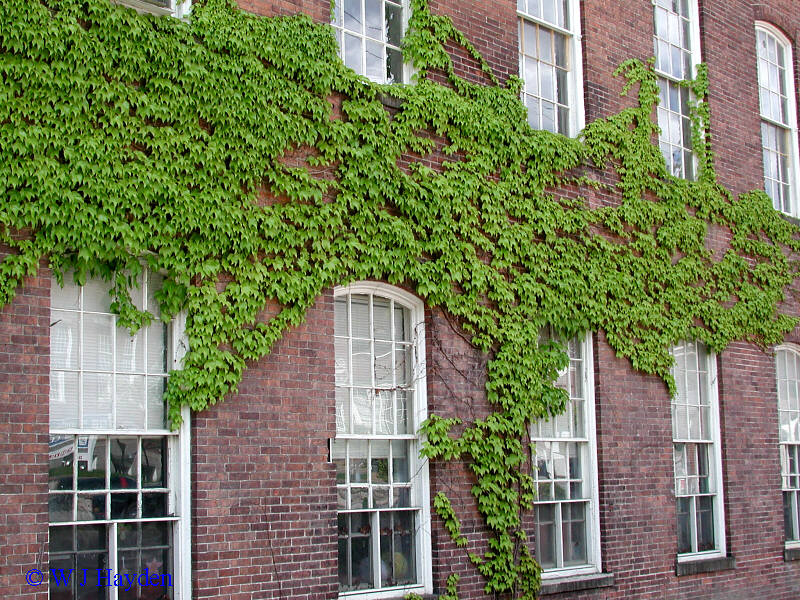
Boston ivy, Parthanocissus tricuspidata Boston ivy
Egyptian cotton, Gossypium barbadense Egyptian cotton
Jerusalem artichokes, Helianthus tuberosus Jerusalem artichokes and the flowering Jerusalem artichoke
Russian sunflowers, Helianthus annuus Russian sunflowers
And the answers are:
Monday, August 26, 2013


Monday, August 19, 2013
Plant Story: Chocolate, Food of the Gods
 |
| Theobroma cacao tree, cacao |
Chocolate is made from the roasted seeds of a small tree, Theobroma cacao, in the plant family Sterculiaceae. It is native to the New World tropics, requiring warm temperatures (never below 60 F/ 16 C!) and plenty of rain. Big pods form on the branches of the tree. Unlike familiar temperate zone fruit trees, the flowers and then the fruit (pods) of cacao come directly from the branches, not off little stems. That is probably important, considering that cacao pods are as big as grapefruits.
Thursday, August 15, 2013
Anniversary post: Six months of blogging
Sometime in the last week I passed my half year anniversary. I've been writing this blog for 6 months.
I expected it to be hard work checking my facts, and it has been. While I am writing I have lots of books and web pages open, looking for facts and ideas. And I do lots of pacing while I think about what I want to include.
It has also been great fun! Writing this blog raises my mood. I work on it for a while and am happier than when I began.
I will certainly go on gathering information about plants, places and the past to share.
Thank you for reading!
I expected it to be hard work checking my facts, and it has been. While I am writing I have lots of books and web pages open, looking for facts and ideas. And I do lots of pacing while I think about what I want to include.
It has also been great fun! Writing this blog raises my mood. I work on it for a while and am happier than when I began.
I will certainly go on gathering information about plants, places and the past to share.
Thank you for reading!
 |
| a fine begonia! |
Comments and corrections welcome.
Kathy Keeler, A Wandering Botanist
Kathy Keeler, A Wandering Botanist
More at awanderingbotanist.com
Join me on Facebook
Monday, August 12, 2013
Visiting Northern California: coastal forests at Inverness
 |
| Forest, California coast |
 |
| Tomales Bay, California |
Not far from the coast, the penninsula with Point Reyes National Seashore has forest to ramble through. Trees included some coast redwoods, but also Douglas fir (Pseudotsuga menziesii), big leaf maples (Acer macrophyllum) and California bay (Umbellularia californica).
Sunday, August 4, 2013
Plant story: miner's candle, Cryptantha virgata
 |
| miner's candle, Oreocarpa virgata, forget-me-not family Boraginaceae |
Like common mullein (previous post) miner’s candle makes a tall spike of flowers in the Rocky Mountain front range. And yet these plants are very different.
Miner’s candle, Oreocarya virgata, formerly Cryptantha virgata, grows on rocky slopes of the Rocky Mountains. The Rocky Mountains extend 3000 miles (4800 km) from northern British Columbia in Canada to New Mexico in the southern United States, so there would seem to be a lot of similar terrain where miner's candle could grow. But it doesn't . It is found only in Wyoming and Colorado. (See records in Rocky Mountain herbarium)
 |
| miner's candle habitat |
Why?
I have no idea.
The genus Oreocarya has 62 species, all in the western United States. Some are widely distributed but others are found only on sand or deposits of volcanic ash. Weber and Wittmann imply miner's candle prefers gravelly granitic slopes, but I don't think those are confined to Colorado and Wyoming.
Despite its narrow geographic distribution, miner's candle can be quite abundant where it is found.
Miner's candle sends up a flowering spike that can be 2 feet (70 cm) tall. The flowers look like large white forget-me-not (Mysotis spp.) flowers, because they are in the same plant family, the Boraginaceae, the forget-me-not family. The leaves have coarse hairs.
How long does miner's candle live? Nobody has studied it but is certainly a perennial, living two or more years.
 |
| miner's candle |
The contrast with common mullein is striking--only one common name, no studies of life cycle or plant chemistry, no reported medical uses, no folklore.
This, sadly, is the case for a substantial number of the world's plants: all we know about them is their name.
 |
| miner's candle Cryptantha virgata |
Where can you see miner's candle? Not in cultivation. Maybe in a native garden in Colorado or Wyoming but I don't remember ever seeing it. It is more likely that you can see it in the wild, although that means in Colorado and Wyoming. Once there it is actually pretty easy to find. These pictures of mine are from Round Mountain Nature Trail, along Route 34 going up Big Thompson Canyon toward Estes Park, CO.
Comments and corrections welcome.
References I consulted
Ellis, James.2006. Rocky Mountain Flora. The Colorado Mountain Club Press, Golden, CO. print
Guennel, G. K. 2006. Guide to Colorado Wildflowers. Plains and Foothills. Westcliffe Publishers, Boulder, CO. print.
Kristen E. Hasenstab-Lehman1,2 and Michael G. Simpson. 2012. Cat’s Eyes and Popcorn Flowers: Phylogenetic Systematics of the Genus Cryptantha s. l. (Boraginaceae). Systematic Botany (2012), 37(3): pp. 738–757 http://www.sci.sdsu.edu/plants/cryptantha/pdfs/Hasenstab_Simpson2012-Cryptantha-Boraginac.pdf
Guennel, G. K. 2006. Guide to Colorado Wildflowers. Plains and Foothills. Westcliffe Publishers, Boulder, CO. print.
Kristen E. Hasenstab-Lehman1,2 and Michael G. Simpson. 2012. Cat’s Eyes and Popcorn Flowers: Phylogenetic Systematics of the Genus Cryptantha s. l. (Boraginaceae). Systematic Botany (2012), 37(3): pp. 738–757 http://www.sci.sdsu.edu/plants/cryptantha/pdfs/Hasenstab_Simpson2012-Cryptantha-Boraginac.pdf
Nelson, Ruth Ashton. Handbook of Rocky Mountain Plants. Skyland Publishers, Estes Park, CO
Rocky Mountain Herbarium, University of Wyoming http://rmh.uwyo.edu/data/search.php (link updated 1/30/21)
Weber, William A. and Ronald C. Wittmann. 1996. Colorado Flora. Eastern Slope. 3rd. ed. University Press of Colorado, Boulder CO. print.
Kathy Keeler, A Wandering Botanist
More at awanderingbotanist.com
Join me on Facebook
Monday, July 29, 2013
Plant Story: Common mullein and its folklore
 |
| common mullein Verbascum thapsus, in late summer |
The name mullein may be from mollis, Latin for soft, a description of the big hairy leaves, but it is possibly from the Latin malandrium, a disease of cattle, for which mullein was a remedy. There are several points of confusion about common mullein (see below). But clearly it has been known so long that its common name is based on Latin.
Pliny called the plant verbascum, so apparently that was another name Latin speakers used. Linnaeus adopted Verbascum as the scientific name for the genus.
The word, thapsus, is the name of a town in north Africa, now Ras Dimas, Tunisia. On April 6, 46 BC, Julius Caesar defeated the forces of Scipio at Thapsus. The battle was fought on the outskirts of the city and the city surrendered shortly thereafter, ending the war against Caesar in Africa. However, when I tried to figure out if that meant that mullein grows in Tunisia, I discovered that en.wikipedia says, convincingly, that thapsus was taken from thapsos, the name of an unidentified plant from Thapsos in Sicily. As far as I can tell the plant has been growing in both areas since prehistoric times. I doubt that it is native to all of Eurasia as the en.wikipedia article says. More probably, long before written history it migrated with humans to all those locations, from some much more limited homeland.
Monday, July 22, 2013
Visiting Northern California: the Coast at Inverness
 |
| Beach at Point Reyes National Seashore, California |
 |
| Dunes, Point Reyes National Seashore, California |
We were there in May and we really did have these beaches to ourselves.
 |
| beach at Point Reyes |
 |
| flowers on the headlands, Point Reyes |
The spring wildflowers were glorious. They dotted the headlands with color.
 |
| California poppy, Eschscholzia californica |
Subscribe to:
Posts (Atom)