Sunday, November 24, 2024

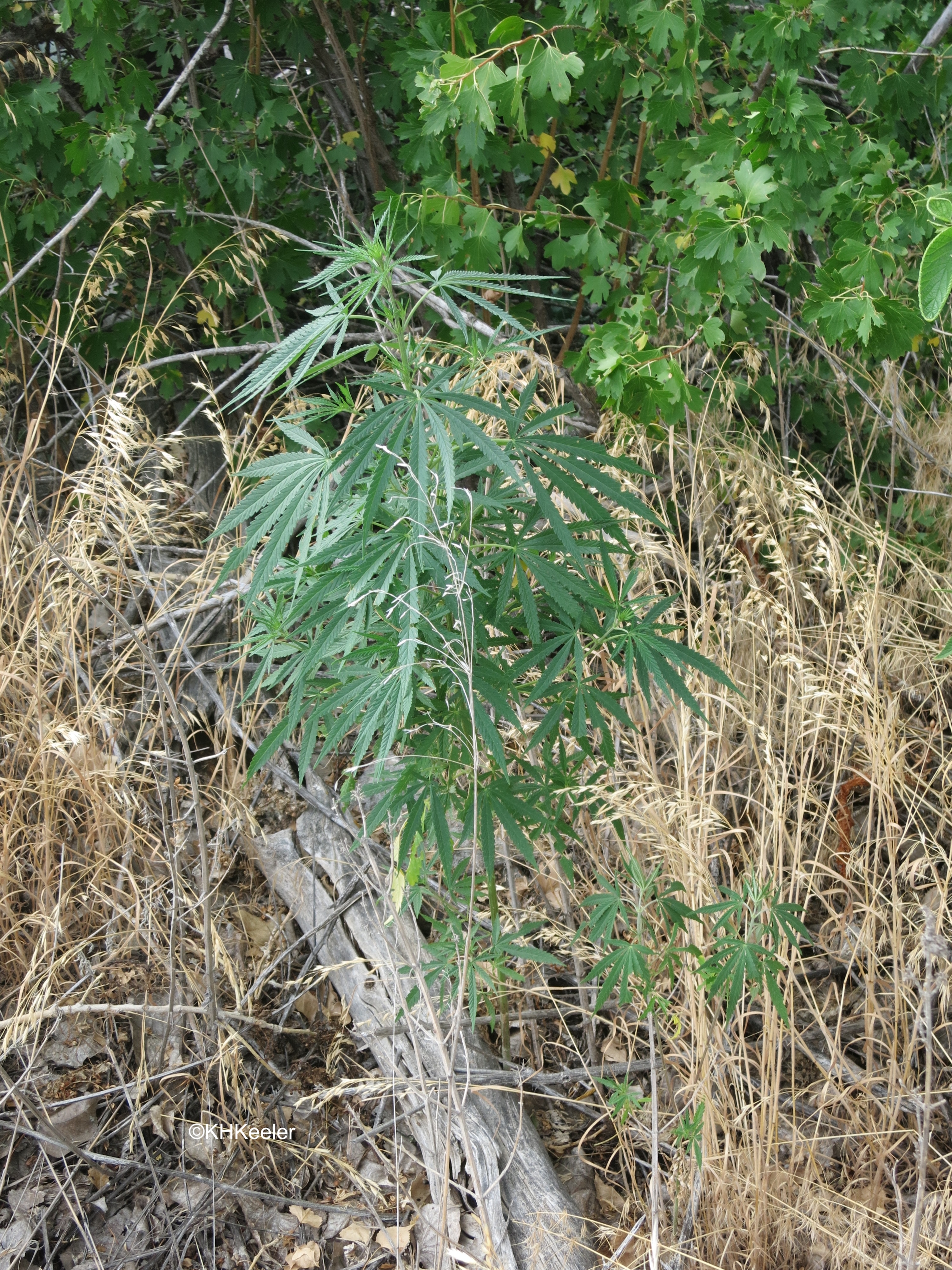
We Called it Ditch Weed and Left it Alone (Cannabis sativa)

The New York Times (11/20/24) reported funding of research on whether cannabis extracts can effectively treat post-traumatic stress disorder (PTSD) and commented that this is a first because as a Schedule 1 Narcotic, permission to study cannabis has been difficult to impossible. That set off a lot of memories for me. 

marjiuana Cannabis sativa amid weeds
marijuana (Canabis sativa) amid weeds

Tuesday, November 19, 2024

Teasel, Dipsacus fullonum, Once an Important Tool

Teasels, Dipsacus fullonum and Dipsacus sativus,  in the teasel family, Dipsacaceae, for centuries were essential to the clothing industry. Today, in North America, they are noxious weeds.

dead teasel plant
teasel showing the seed heads

Sunday, November 10, 2024

Quick Overview of Bee Pollination

Bees are numerous and are good pollinators, so many plant species have flowers tailored to bees.

bumblebee on golden banner
Bumblebee (Bombus) pollinating golden banner (Thermopsis montana)

Monday, November 4, 2024

Plant Story--Artichoke, Cynara cardunculus, Edible Thistle

You do know that the artichoke is the immature flower head of a thistle, don't you? It is a strange vegetable, with layers of leaves you tear off to eat a bit of "meat" at the base, but that doesn't make most people think of thistles. Nevertheless, the artichoke, Cynara cardunculus, sunflower family Asteraceae, is the cultivated version of a big thistle from around the Mediterranean, the wild ones called cardoons or artichoke thistles.

artichoke in grocery store
artichoke (Cynara cardunculus) in grocery store

Monday, October 28, 2024

Photo Story--Beautiful, Stark Salta, Argentina

Just as in North America, the prevailing winds bring moisture from the Pacific that drops on the mountains, making a dry zone at their base in eastern Oregon and Washington and on the Colorado Front Range, so in South America, the winds from the Pacific leave their water on the west side of the Andes and at the base of the mountains, on the east, it is very dry. This effect is the most dramatic as you approach the tropics, in North America in Arizona and northern Mexico, in South America in northwestern Argentina's Jujuy and Salta Provinces.
 
dry Argentine landscape
Rocky landscape of Salta Province
 

Monday, October 21, 2024

Plant Story--Colorful Common Tansy, Tanacetum vulgare

Tansy is a small plant with bright yellow flowers and a spicy smell (scientific name, Tanacetum vulgare sunflower family, Asteraceae). It is native to western Asia but long ago became an herb and spice that was grown throughout Europe and then transported by Europeans all over the world. Today we know it more as a garden flower or roadside weed than as a flavoring or medicine, but it is all of those. 

common tansy, Tanacetum vulgare

Monday, October 14, 2024

Plants and Pollinators

 One of the ideas that attracted me to ecology as a student was pollination. In particular, the match between flowers and their visitors. Bees like open flowers like echinacea and bees can enter closed flowers like peas, but some flowers are too long and narrow for them to reach the nectar. This results in patterns in nature, plants that are mainly bee-pollinated, for example, and plants that are not pollinated by bees. And those bee-flowers share characteristics, so that you can recognize them, just as bees do. 

bee drinking nectar from golden banner flower
Bumblebee drinking nectar from golden banner (Thermopsis montana)
                                The pollen and stigma are hidden inside the lower lips of the flower,
                                   they bump into the bee's abdomen as it feeds, transferring pollen.