Showing posts with label Colorado. Show all posts

Sunday, December 7, 2025

Guanella Pass in the Rocky Mountains

Winter enhances memories of summer. Here is a July visit to Guanella Pass, in the Rocky Mountains of central Colorado. 

Rocky Mountains, central Colorado
Rocky Mountains, central Colorado, July

Monday, April 15, 2024

Growing Natives in Colorado

 There is a national push for homeowners in the U.S. to grow plants native to their area (see previous posts  part1; part 2; part 3; HNPwebsite). The number of birds and insects have been dropping over the last 50 years. Lack of food is blamed because we replaced native habitat with lawns and parking lots. Rewilding our neighborhoods is not a realistic solution; what is suggested is that we each grow regional natives on our properties, making our yards contribute to local habitat. 

native alpine wildflower
Alpine clover Trifolium dasyphyllum, an alpine tundranative that won't survive
in Denver, though the distance is only 50-60 miles.

What to grow in Colorado is a challenge. First, Colorado has unique native wildflowers, so advice from the coasts is often misleading. Second, Colorado is complex, with natives changing as you go up in elevation, over the Continental Divide, or from north to south; getting really local information is difficult. 

Sunday, August 6, 2023

A Hike in Evergreen, Colorado, July 2023

Walk with me. Imagine late July at Alderfer Park in Evergreen Colorado, at 7800' in the Rocky Mountains. The morning was turning hot, but was still pleasant. 

Meadow Trail, Alderfer Park
Start of the trail 

Sunday, March 12, 2023

Gardens and Natives: Colorado is Distinct from the East

I attended Landscaping with Colorado Native Plants conference in February. I came away very conscious of all the differences in gardening between our region and other places, especially the eastern U.S. If you want to grow Colorado natives, they recommended planting in a thick layer of crushed gravel (stone!), adding no fertilizer, washing off the potting soil to plant plants bare-rooted, and within a year, reducing water to once per week or once per month or not at all (that is, depending on rain and snow for water).  

natural vegetation, Colorado grassland
 natural vegetation, Colorado grasslands

We imported our idea of landscape and garden mainly from settlers who came from Kansas or Iowa or Kentucky or Pennsylvania.

Sunday, June 20, 2021

Spring Wildflowers in Boulder

It was planned an easy morning hike: park the car at Chataqua Park in Boulder, Colorado, and walk southward, uphill. But the Front Range had a much wetter than normal May (2021), so the plants were lush and flowering vigorously. It turned into a spectacular wildflower walk:

Looking up at the Flatirons

the Flatirons, Boulder, CO

Sunday, June 14, 2020

Estes Park, Colorado, June 2020


Rocky Mountain National Park
Sheep Meadow, Rocky Mountain National Park
                           
We stayed at home from March 14 to May 31, 2020. Rocky Mountain National Park was closed then, in part to reduce crowds that might bring the corona virus to the nearby towns. One of Colorado's early lessons in the Covid-19 pandemic was that clinics in mountain towns have very small ICU (Intensive Care Units) and are easily overwhelmed. By late May, Colorado was reopening and Rocky Mountain National Park announced its own reopening, with a new daily entry pass required, free ($2 service charge and normal entrance fees), available online, but in limited numbers, to manage crowds. We booked a hotel we knew (Woodlands on Fall River) that has cabins with separate entrances. And off we went for three midweek days.

Sunday, September 1, 2019

Garden Bloggers Fling 2019--Loveland and Fort Collins

High Plains Environmental Center, Loveland, CO
Garden Bloggers take lots of pictures. These of plantings of Colorado
native plants at High Plains Environmental Center in Loveland
The Garden Bloggers Fling is an conference of garden bloggers. Each year they gather to visit gardens. I went in 2017 and this year, when the conference was in greater Denver,  June 13-16, 2019. My summer has been so busy I haven't written about it.

Sunday, April 21, 2019

Visiting Colorado--Devil's Backbone, Loveland, Colorado in June

Devil's Backbone, Loveland Colorado from the northeast

Devil's Backbone is a distinctive rock outcrop on the western side of Loveland, Colorado. 

Devil's Backbone, Loveland Colorado from the north

Along the northern side, the land has been preserved as Devil's Backbone Open Space (link). The hiking trails lead west and north through Rocky Mountain Front Range grasslands. It is a favorite hike of mine.

Here is what you might see in June.

Sunday, April 29, 2018

Visiting Northern Colorado--Early Spring Wildflowers

Devil's Backbone, Loveland, Colorado
Plants seen along the Devil's Backbone Trail, Loveland, Colorado
This year, spring in northern Colorado has been punctuated with cold snaps and snow storms, which have delayed the appearance of spring wildflowers.

Well, that is one way to say it. Another is that the cool temperatures extended the visibility of the early flowers.

Sunday, December 17, 2017

Flowers of the Colorado Winter

pansies, December 16, 2017 Northern Colorado
pansies, December 16
Its mid-December at about 5000' on the east side of the Rocky Mountains. Often we have mild temperatures this late in the year but this year is unusually warm. We have had several snowstorms and some really cold days, but for most of the last two weeks its been below freezing overnight and as high as 60 F by day.

Plants are flowering.

Sunday, August 6, 2017

Visiting Northern Colorado--Yampa River Botanic Park

No plant enthusiast passing through Steamboat Springs, Colorado should miss the Yampa River Botanic Park. Website

The Painter's Garden, Yampa River Botanic Park
The Painter's Garden
This gem is snuggled along the Yampa River on the north side of the city of Steamboat Springs. The six acres are divided into dozens of individual gardens, tended or supported by the Steamboat Springs community. Some have themes--the Blue Garden, the Butterfly Garden, the Painter's Garden--some just feature plants the gardener loves.

Sunday, March 26, 2017

Visiting Colorado--The Foothills in March

I've been out in Larimer County Parks, checking out sites for spring wildflower walks. I took lots of pictures to get a head start identifying the common plants on those trails. I thought my walks to be "early spring drab" ... then I reviewed my slides.

Look!

Carter Lake, Larimer County, Colorado
The trail beckons
south end of Sundance Trail, Carter Lake

Sunday, December 18, 2016

Botanist Visiting London--in December

Two years ago I was in London in the first half of December. Looking back at the photos, I'm struck by the contrast to Colorado at the same time of year.
London, December
northern Colorado, December
London is well north of Denver, any map will show you that. Yet, the ocean effects prevail: it was much warmer than the Colorado we'd left behind. Not only was it warmer, I saw many plants that we cannot grow in Colorado.

Wednesday, June 1, 2016

Where to Buy Milkweeds to Grow in Colorado

Colorado, straddling the Rocky Mountains, has, on the eastern side--Front Range--monarch butterflies from the eastern North American population and on the Western Slope, butterflies from the western monarch population. Colorado doesn't fit neatly into the current "Grow Milkweeds for Monarchs!" push because the common milkweed, Asclepias syriaca is not native here.

Monarch caterpillars eat only milkweeds, so reductions in milkweed populations reduce monarch butterfly numbers.
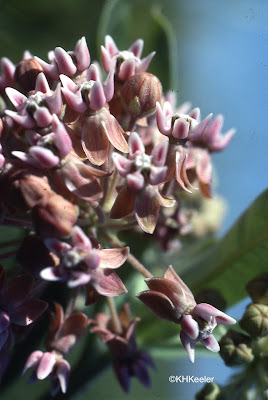
showy milkweed, Asclepias speciosa
a Colorado milkweed
showy milkweed, Asclepias speciosa
Milkweeds are native all across North America--there are 140 species--but that "weed" in their name makes us assume they are ubiquitous. Far from it. Planting milkweeds to help monarch butterflies find it easier to find food for their larvave makes very good sense.

The common milkweed (A. syriaca) doesn't grow in Colorado. Since there are 19 species of milkweed native to Colorado, it only makes sense to grow those. The easiest to grow is the showy milkweed, Asclepias speciosa It is the milkweed you see in Colrado side-lots and roadside ditches. It looks a lot like the common milkweed.

Sunday, May 15, 2016

Visiting Northern Colorado--Horsetooth Mountain Park in Sunshine

Horsetooth Mountain Park, Fort Collins, Colorado

Five days later (see last week's blog) I revisited Horsetooth Waterfall Trail, this time on a sunny morning after three days of warm weather.

Flowers that close in cold weather were open!

Sunday, May 8, 2016

Visiting Northern Colorado--Horsetooth Mountain Park in Spring Snow

Horsetooth Mountain Park
Horsetooth Mountain Park trail, in falling snow
April 28. I needed to check out the trailside plants of Horsetooth Mountain Park, on the west side of Fort Collins Colorado, for a plant hike I was going to lead the next weekend.

When I got there it was snowing. Lightly, mixed with sleet, but persistently.

One of the things I learned as a prairie ecologist: "do it now, the weather later may be worse."

Hiking out in the sleet/snow was cool but not unpleasant and I knew the weather forecast was for snow for the next three days. Out I went!

Sunday, November 29, 2015

The Range of Prairie Plants--Natives of Edmonton, Alberta


blanket flower Gaillardia
blanket flower Gaillardia aristida
"I know that plant!" I was 1200 miles almost due north of home, in Edmonton, Alberta at a Botanical Society meeting. I had never been that far north in Canada. There, a native garden at the Shaw Conference Centre featured plants important to the local Cree tribe. And most were plants I knew from Colorado. See blanket flowers, asters, monarda in Edmonton, below and in my "grow local natives" Denver Post article.

Sunday, October 18, 2015

Just a Glimpse of Milkweed Diversity

swamp milkweed, Asclepias incarnata
swamp milkweed, Asclepias incarnata
Milkweeds, genus Asclepias, the dogbane family, Apocynaceae, are wonderful plants. They are such a distinctive group that they are easy for botanical beginners to recognize. Consequently, I have been taking photographs of milkweeds since I was a graduate student who could identify only one or two wildflowers.

Sunday, October 11, 2015

Milkweeds, Monarch Butterflies and Colorado

"Plant milkweeds!" they say. But which ones?
common milkweed, A. syriaca
common milkweed, Asclepias syriaca
The number of monarch butterflies (Danaus plexipus) seen in the eastern United States has declined dramatically over the last couple decades. Monarch experts, e.g. Drs. Lincoln Brower and Orley Taylor, make a strong case that the decline has been caused by several factors: First, 1), changes in agriculture in the U.S. midwest that have reduced the number of milkweeds for monarch butterflies to feed upon. In particular, use of herbicide-resistant crops eliminated the common milkweed, Asclepias syriaca (dogbane family, Apocynaceae) which had been growing as a weed in the corn and soybeans. Simultaneously, high prices for corn and soybeans, now used for biofuels (ethanol) as well as human and animal food, favored expansion of weed-free cropland into areas that previously supported wild plants including milkweeds. Another cause of monarch butterfly decline is, 2), loss of forests in their overwintering grounds in Mexico, due to illegal logging and poor management. In addition, 3), periods of unfavorable weather reduced growth of monarchs and allowed their natural enemies, from birds and ants to fungal diseases, to find and kill them. (See the Taylor lecture with all the data; link). To counter the decline in monarch butterflies, many changes may be required, but much can be done by having more milkweeds available for the butterflies. Monarch butterfly caterpillars eat milkweeds and accept no substitutes. Consequently, concerned experts and citizens urge planting milkweeds so that there is ample food for monarch caterpillars. Adult butterflies get norishment for the nectar from flowers of many plant species so adult food is rarely an issue.

milkweeds in Colorado
wild milkweeds in Colorado, showy milkweed
If a major part of the problem is reduction in milkweed numbers, then planting milkweeds is a very effective response. To aid that, a variety of organizations are advising people all across North America to plant milkweeds, providing links and advice, and in some cases giving away milkweed seeds. (Monarch Watch, Save our Monarchs, Xerces Society )

However, not everyone should just write away for free seeds and toss them into their yard. My concerns are from the point of view of growing well-adapted native plants. If the plant dies, you've wasted your time and energy and any monarch caterpillars relying on it die too. Conversely, introducing troublesome new weeds would be an undesirable outcome of this campaign. Plant the right milkweed for your area.