Plant Story -- Reasons to Like Primroses, Primula species
reposted and slightly edited from 2014 post.
 |
| common primrose, Primula vulgaris |
I had been trying for years to grow primroses, genus Primula. In 2013m stuck three sad little plants, rescued from the nursery’s end-of-the-season stock, into my yard and ooh, in 2014 all three are alive and flowering!
 |
| Primrose eliator, from my yard |
What is special about primroses?
They are pretty!
Also, I associated them with the literature set in England I read as a child. Primroses grew in the well-tended gardens of the ladies in quaint English villages. They are pretty!
 |
| primrose, Primula probably polyanthus group, 19th century hybrid of P. veris x P. vulgaris |
Not roses
Not evening primroses
Primroses are in the genus Primula, family Primulaceae. There are nine genera in the primrose family, distributed all over the world, but especially in the Northern Hemisphere. The only other one I recognize even today after 40 years studying plants is Dodecoatheon, shooting star picture at Missouri Botanic Garden
The USDA plants website lists 20 Primula species, genuine primroses, in North America, all native except 2--and yet almost none of them grow in the places I’ve lived; New York, Ohio, Michigan, Nebraska and California (USDA map go to subordinate species). Although four species can be found in Colorado, I have not yet seen them in nature.
Roses and evening primroses, both NO relation to primroses, are much more familiar to me.
Why try to grow an unfamiliar plant?
Well, because of primrose's happy reputation.
Primroses bloom early in the spring. The name, Primula, is from the Latin word for first, primus, referring to their early spring flowering. For England, they are one of the flowers that symbolize the coming of spring. (In England the common primroses are often called cowslips.)
The Primrose Path sticks in my mind as a positive association, but in fact it is from Shakespeare and slightly sinister:
Oops, the folklore isn't so positive
-- but they are still pretty.
Comments and corrections welcome.
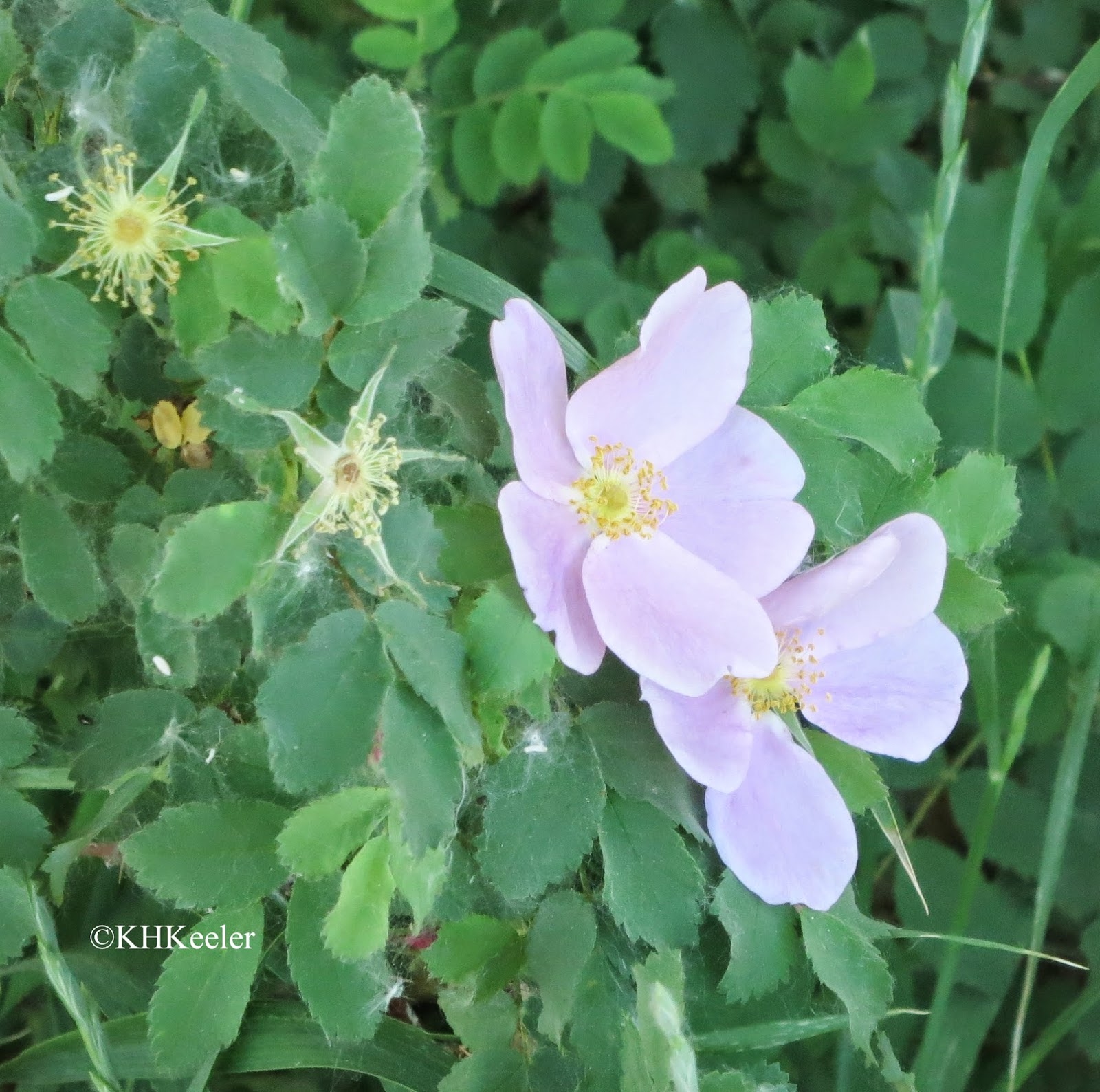 |
| wild roses, Rosa woodsii, rose family, Rosaceae |
 |
| evening primrose, Oenothera macrocarpa, evening primrose family, Onagraceae |
 |
| oxlip primrose, Primula eliator |
The USDA plants website lists 20 Primula species, genuine primroses, in North America, all native except 2--and yet almost none of them grow in the places I’ve lived; New York, Ohio, Michigan, Nebraska and California (USDA map go to subordinate species). Although four species can be found in Colorado, I have not yet seen them in nature.
Roses and evening primroses, both NO relation to primroses, are much more familiar to me.
Well, because of primrose's happy reputation.
Primroses bloom early in the spring. The name, Primula, is from the Latin word for first, primus, referring to their early spring flowering. For England, they are one of the flowers that symbolize the coming of spring. (In England the common primroses are often called cowslips.)
The Primrose Path sticks in my mind as a positive association, but in fact it is from Shakespeare and slightly sinister:
Doe not as some vngracious pastors doe,
Showe me the step and thorny way to heauen
Whiles a puft, and reckles libertine
Himselfe the primrose path of dalience treads. (Hamlet, I iii 50) Primroses had a definite association with wantonness in English folklore.
Folklore also linked primroses to the success of chickens, so that in most places it was bad luck to pick primroses and bring them into the house in the early spring as the hens were starting to lay eggs. In particular the number of primroses picked was the number of fertile eggs the chickens would lay, so bringing in 13 or more primroses was great, but picking only one or two meant there would not be enough eggs this spring. At the beginning of spring, when you'd most want to pick the first primroses to celebrate spring, finding more than 13 might be very difficult. Be careful what you start, you might be hiking a long way for a couple more primrose flowers, even when you don't really believe it affects the chickens.
 |
| primrose, Primula, probably a hybrid. Big blue bud. |
-- but they are still pretty.
More about primroses: 2nd post on them in 2014 blog
Comments and corrections welcome.
References
Martin, Laura C. 1987. Garden flower folklore. The Globe Pequot Press, Chester Connecticut.
Vickery, Roy. 1995. Oxford dictionary of plant-lore. Oxford University Press, Oxford.
 |
| primrose, Primula eliator |
I gathered posts from this blog into books for those who don't read the internet or prefer books, for example:


No comments:
Post a Comment