 |
| blue mustard, Chorispora tenella |
Showing posts with label Cruciferae. Show all posts
Showing posts with label Cruciferae. Show all posts
Sunday, May 17, 2020
Plant Story--Blue Mustard, Chorispora tenella
Spring is the blooming time of many plants of the mustard family, Brassicaceae, from shepherd's purse to black mustard to clasping pepperweed, but also radishes, cabbages, and oilseed rape. The family is pretty easily recognized because the flowers have four petals in the shape of a cross, the source of the older (still valid) family name Cruciferae.
Blue mustard, Chorispora tenella, is one of the spring mustards. Actually, its seeds germinate in the fall, the young plants lay low over the winter and put on a spurt of growth in spring to flower in April or May, dying in the heat of midsummer. That life cycle is described as being a winter annual, and like many winter annuals, if conditions are right, blue mustard seeds will germinate in spring and grow rapidly, making them also "spring annuals."
Monday, July 1, 2013
Botany Rules 4: Who Makes the Rules?
 |
| Nasturtium officinale NOT Nasturtium nasturtium-aquaticum |
Who makes the rules for plant names?
The answer is: The International Association of Plant Taxonomists (IAPT) (home page).
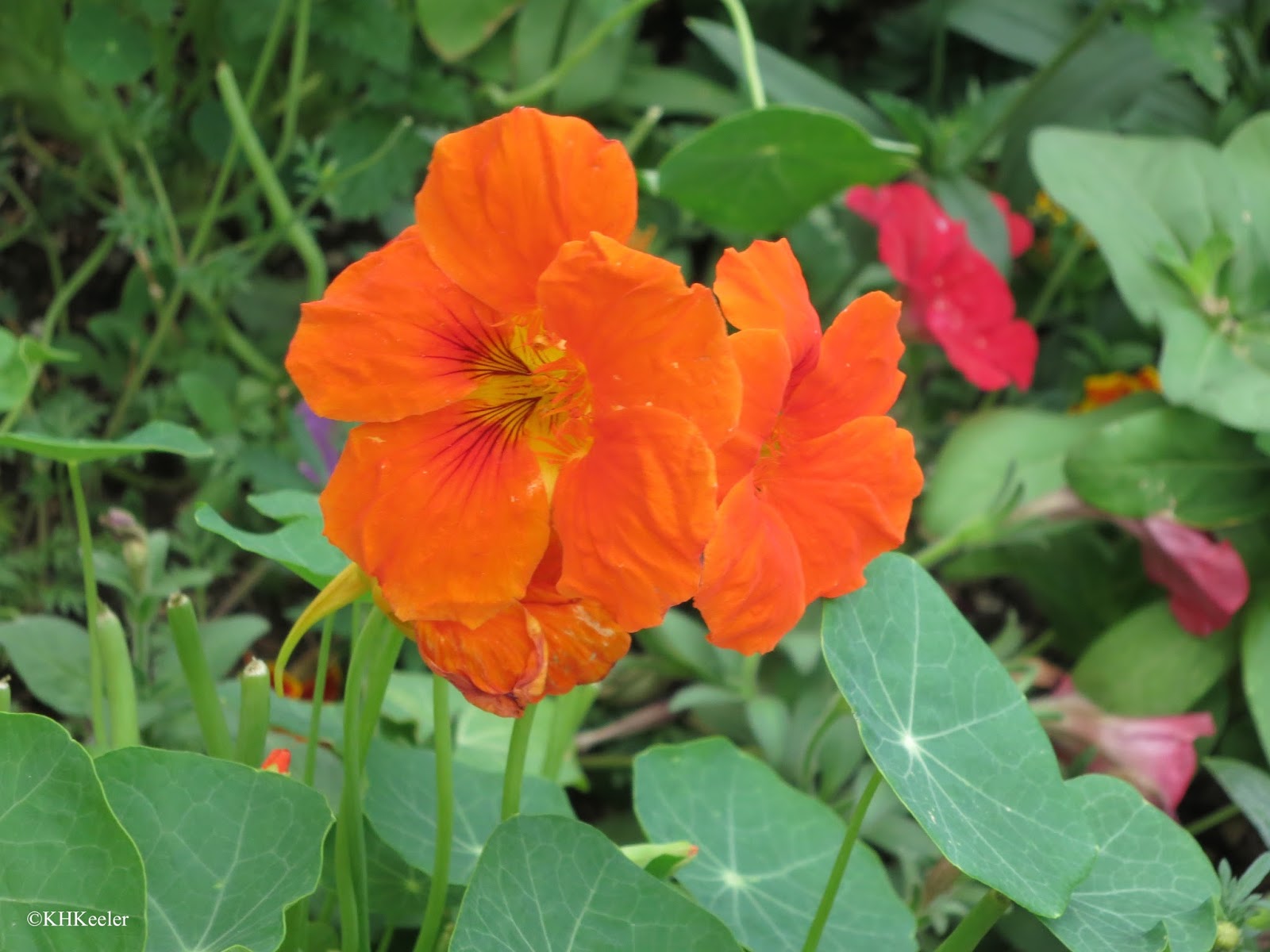 |
| Tropaeolum, determined to be sufficiently different from other plants that it is the only genus in family Tropaeolaceae |
Like all of science, it is a human activity. Like all human activities, therefore, it is subject to quirky human behavior.
Subscribe to:
Posts (Atom)