Sunday, November 16, 2014

Visiting Spain--Mallorca, palms and sunshine

We set sail from Barcelona in Catalonia, eastern Spain, for Mallorca on a tour with Gohagan Travel and the University of California Alumni Association. Mallorca is the largest of the Balearic Islands, four inhabited islands and some tiny ones, in the Mediterranean east of Spain. They are currently Spainish, but like much of the area, were once Phoenician, Carthaginian (Punic), Roman, and Moorish, Catalan, independent--at least--before becoming Spanish.  

You'll see the spelling Majorca. Same place. The residents spell it Mallorca, so I will too.

Mallorca
coast of Mallorca

Sunday, November 9, 2014

Orange, oranges and carrots

carrots
Do you remember the James Burke tv series Connections showing surprising relationships between unrelated things? There are plant stories like that, for example, of orange, carrots and politics.

Wild carrots, Daucus carota, known as Queen Ann's lace in the U.S. (parsley family, Apiaceae) are native all across Europe and the Middle East. Humans have used carrots medicinally for a very long time (see for example Culpeper, 1814 edition of 1633 book; Mrs. Grieve 1932).) Carrots were first domesticated in Afghanistan, producing a readily-grown carrot that was, however, stringy and bitter. These carrots, distributed out from Afghanistan were multicolored: purple, red, orange, yellow and off-white, but especially purple and whitish. People all over Eurasia grew them for medicine, but also as a food flavoring. Like bay leaves or garlic cloves, they were added for flavor but not necessarily eaten.

About 1600, plant breeders in Holland bred a truly edible carrot. Everyone agrees that all our modern carrot varieties, even the heritage carrots, are derived from the carrot variety Long created in Holland at the beginning of the 17th century.

The Long carrot was orange.

Nobody can prove that the Dutch growers had a political agenda creating an orange carrot, but, whether or not they did, soon after that the orange carrot became very political.

Sunday, November 2, 2014

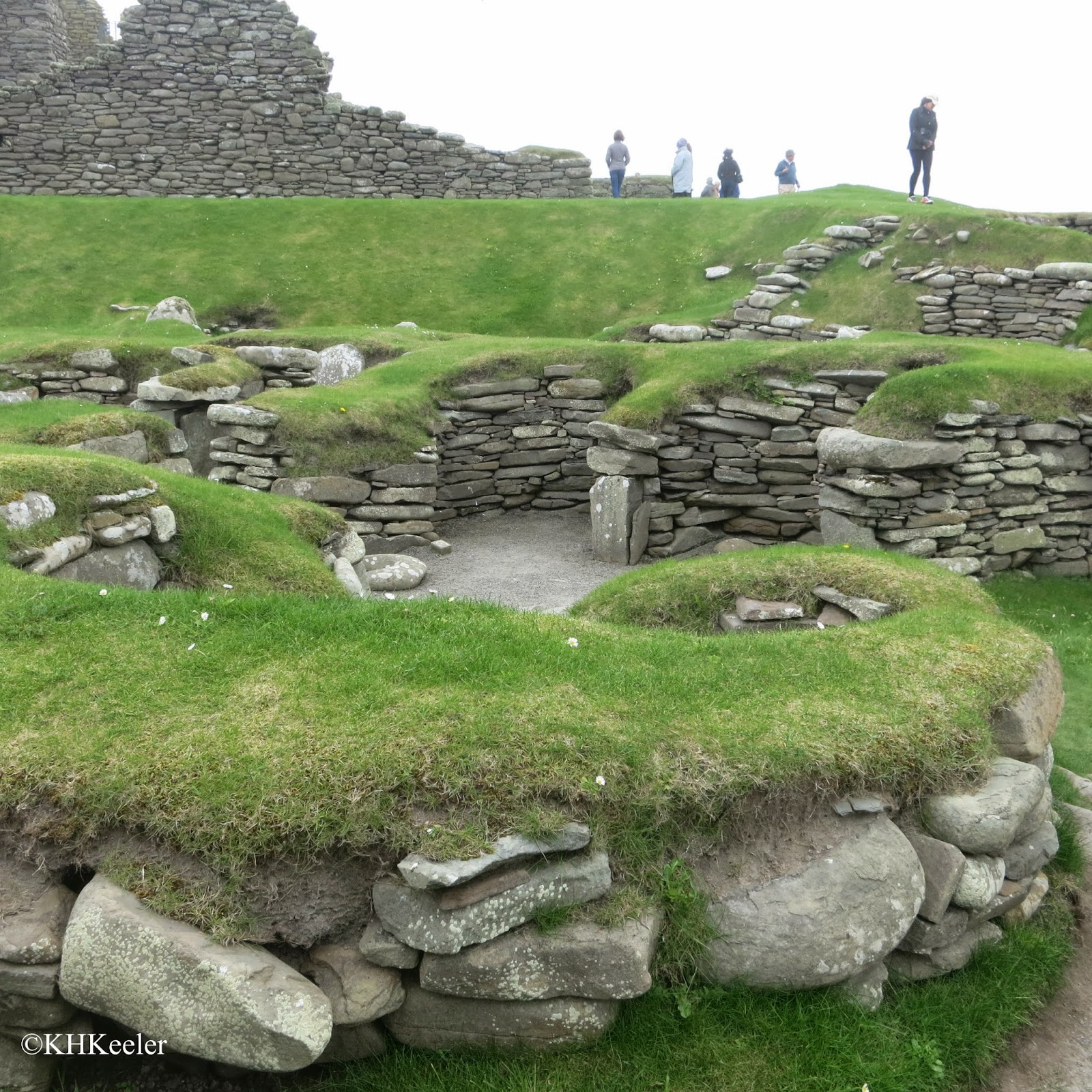
Visiting Scotland--A glimpse of Shetland's prehistory

Jarlshof, ShetlandNorthern Europe has absolutely marvelous archaelogical sites dating back thousands of years. 
On Shetland I visited Jarlshof. Here, the brutal Earl Patrick Stewart built a fortified manor on the same site as a 800 BC Bronze-age village. 

Today nobody lives there, but the ruins and artifacts are from the Neotlithic (2500-1500 BC), then Bronze Age, Iron Age, Pict, Norse and Scots' settlements! (link)  

Sunday, October 26, 2014

Visiting Scotland-- a bit of wild Shetland

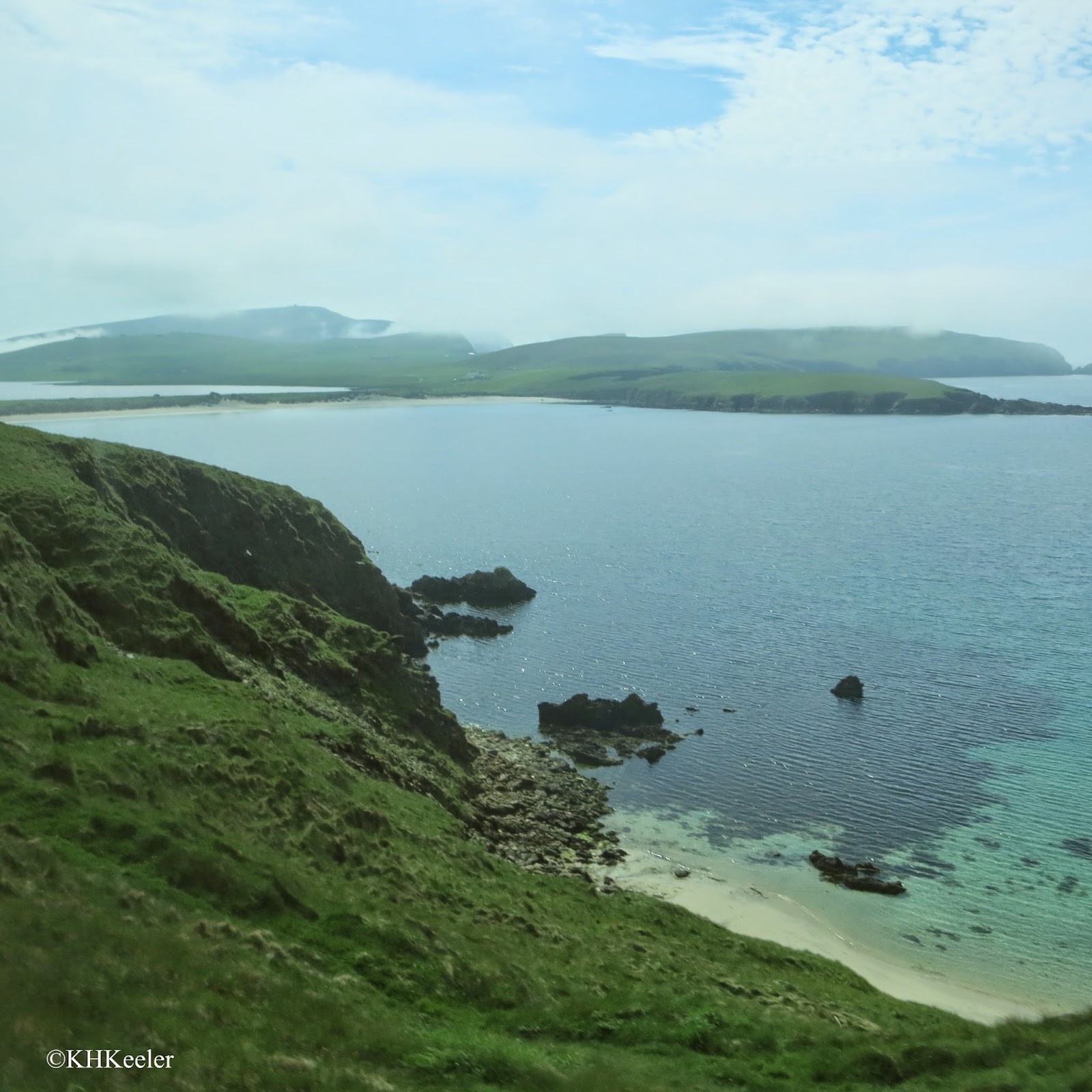
Last May I visited the Shetlands on a tour with Academic Arrangements Abroad and the Met. The northmost part of Scotland, they are beautiful!

Shetland, Scotland

First I looked out at the stunning view above, then down at the grass. Here you see plantains, Plantago lanceolata, flowering in the grass (blog on plantains).

Plantago lanceolata on the Shetlands
narrow-leafed plantain, Plantago lanceolata, in the grass

Sunday, October 19, 2014

Plant story: The amazing dioecious buffalo grass, Buchloë dactyloides

buffalo grass, male flowers
buffalo grass, male flowers, sticking up 

Buffalo grass, Buchloë dactyloides' (or Bouteloua dactyloides) [previous posts on buffalo grass and bison; drought tolerance, name] is a short drought-tolerant native American grass. It was one of the dominant (most common) grasses of the American high plains with a broad range from Mexico to Canada across our driest grasslands. It is highly regarded as food for cattle and bison. It is now being widely planted as a water-efficient lawn grass.

The success of buffalo grass is the more amazing to me because buffalo grass is dioecious. Dioecious means that there are male plants and female plants that have to mate before a seed is produced.

Sunday, October 5, 2014

Plant Story - American Squashes

zucchini and yellow summer squash
Sorting out the squashes is a job for experts, which I am not. They are wonderfully confused.

“True squashes” are plants in the genus Cucurbita (Cucurbitaceae, cucumber family). About 15 species make up Cucurbita, all of them native to the Americas. 

Melons, such as cantalope genus Cucumis, watermelon, genus Citrullus (blog about watermelon) and others--all the melons--are from Asia, Africa or Europe.