Showing posts with label history. Show all posts

Sunday, October 5, 2025

Travel Story--Wales

I took a tour in Wales, mainly along the coast. Wales, the southwest corner of Britain, is about 170 miles long and 60 miles wide, but hills, mountains, and rivers make it a lot more complex.  My tour, with Road Scholar, began just north of Wales in Manchester, and circled south along the coast, finally turning east to Cardiff and then London. 

We saw lots of green pastures, with cows or sheep

Wales countryside from the bus

Sunday, February 27, 2022

Evening Primroses in Early Modern Science


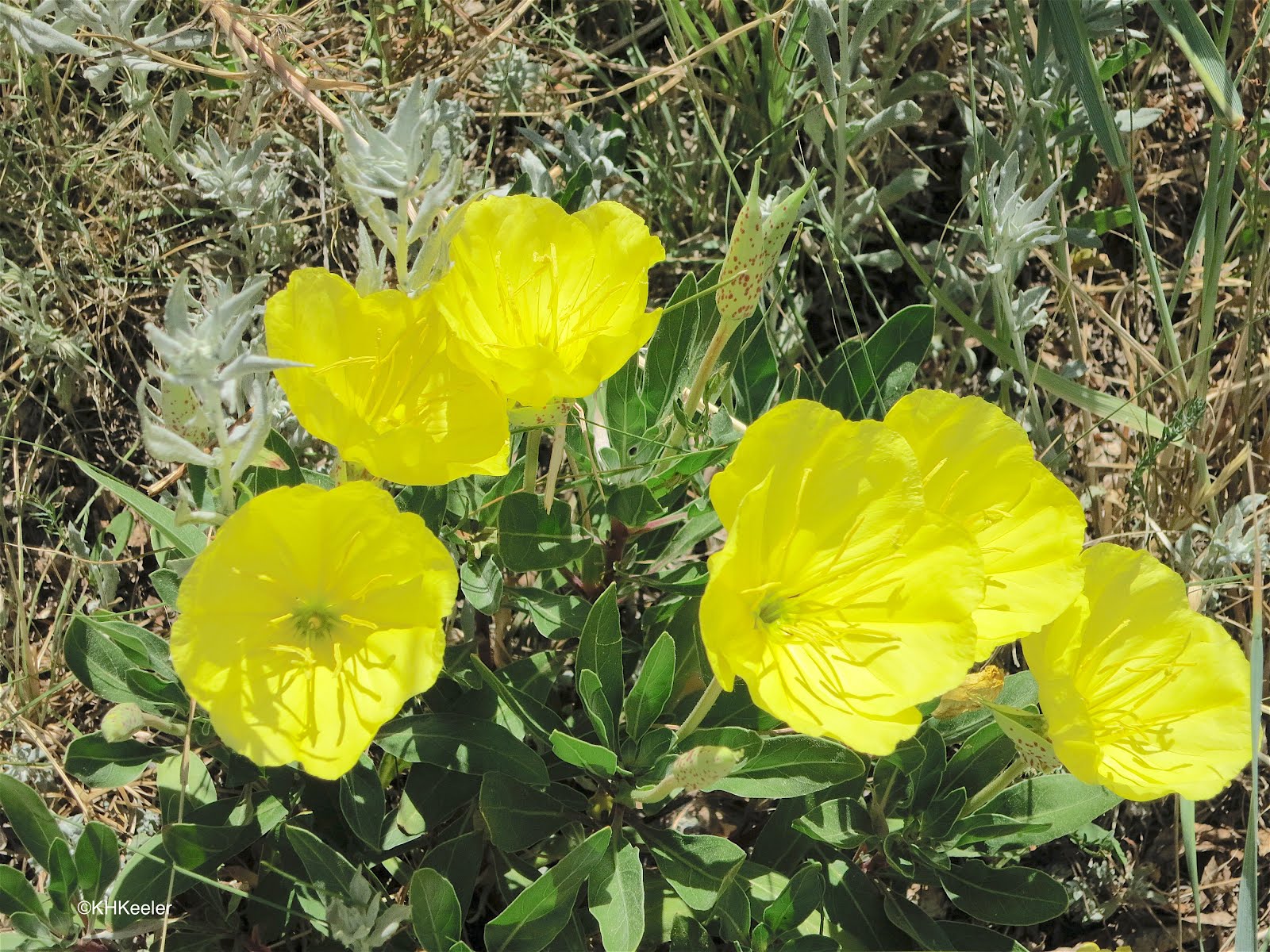
Missouri evening primrose, Oenothera missouriensis

Evening primroses are a group of moderately obscure North America wildflowers (genus Oenothera, evening primrose family, Onagraceae). Unrelated to primroses or roses, evening primroses are pretty and easy to grow, so they have played a solid role in the development of genetics and plant biology.

If you ask, "why do botanists study some plants and not others?" the answers are all very human. Does it grow where they work? Or at a spectacular location where they would like to work? Do they know the plant? That gives showy flowers an edge. Can it be grown easily? Having as many plants as you want allows much better experiments.

Evening primroses do most of those well, so they were noticed by botanists long ago. Which led to publications about their biology, and to more study.

Sunday, January 23, 2022

A Plant's View: Plants in History

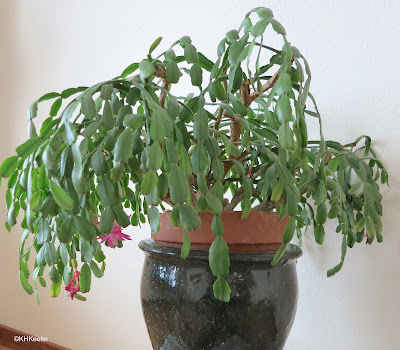
"Seriously," said Junior the Christmas cactus, wise in the ways of humans after decades as a houseplant, "What humans call history is just a list of past attempts to capture plants. You tell it as if heads of state or armies that were responsible, but, really, possessing particular plants is what has always motivated humans."

"Huh?" I said. 

Christmas cactus named Junior
Junior, a Christmas cactus

"Where should I start?" they asked. "The key to what you call civilization was agriculture. From that came cities and countries. Tell me that isn't all about plants?"

Sunday, November 12, 2017

Plant Story-- The Under-Appreciated Parsley

Parsley doesn't get much respect. Restaurants garnish plates with a sprig of parsley, but diners rarely eat it.

parsley leaves

And yet, parsley has a long history as a breath-freshener. And will help settle your stomach.

Sunday, December 20, 2015

Plant Story--Peas, Pisum sativum

peas


The three faces of peas--fresh peas, dried peas, and edible-pod peas--are different enough that it is hard remembering they are all the same thing, peas, Pisum sativum (pea family, Fabaceae).

Mostly, when we say "peas" today, we are thinking of shelling peas (garden peas, English peas) especially ones that have been frozen, since peas freeze really well and season for fresh peas is short.

fresh peas
Fresh shelled peas
But it was because they could be dried and stored that peas were one of the very first plants domesticated in the Middle East.

Sunday, July 12, 2015

Visiting Frisia--The Edge of the North Sea

coast, Frisian Islands
the Frisian Coast
Frisians? Who are the Frisians?

I first remember asking that question in reaction to a Great Courses course (link) about the Vikings. The Vikings came out of Scandinavia as raiders about 700 AD. Better ships, more seaworthy on rougher seas, made that possible, but authors only speculate on the social and cultural forces that motivated Scandinavians to become Vikings. Before 700, the people of Scandinavia were thought to be a backwater of Europe. But not really so backward, the course suggested, because they traded with the Frisians who traded with the Romans, so that all manner of Roman Empire technology made its way into Scandinavian villages.

So who were the Frisians? When a tour (National Geographic Expeditions, see details) offered a stop on the Frisian Islands, I was in!

Sunday, March 15, 2015

Plant Story -- Pomegranates, Punica granatum, in Story and Symbolism

A myth started me looking up pomegranates.

In Granada, Spain, last fall, the guides explained that Granada was named for pomegranates, granada in Spanish, and that the Moors had brought pomegranates to Spain. Which I heard as "the Moors brought pomegranates to Europe" since they introduced many Middle Eastern and Asian plants to Europe by planting them in Spain.

But I knew that pomegranates played an important role in Greek mythology...so the Moors couldn't have brought pomegranates to Europe.

Pomegranates appear in mythology all over the Old World. Bright red flowers, big fruit full of seeds--everyone noticed them.

Sunday, November 2, 2014

Visiting Scotland--A glimpse of Shetland's prehistory

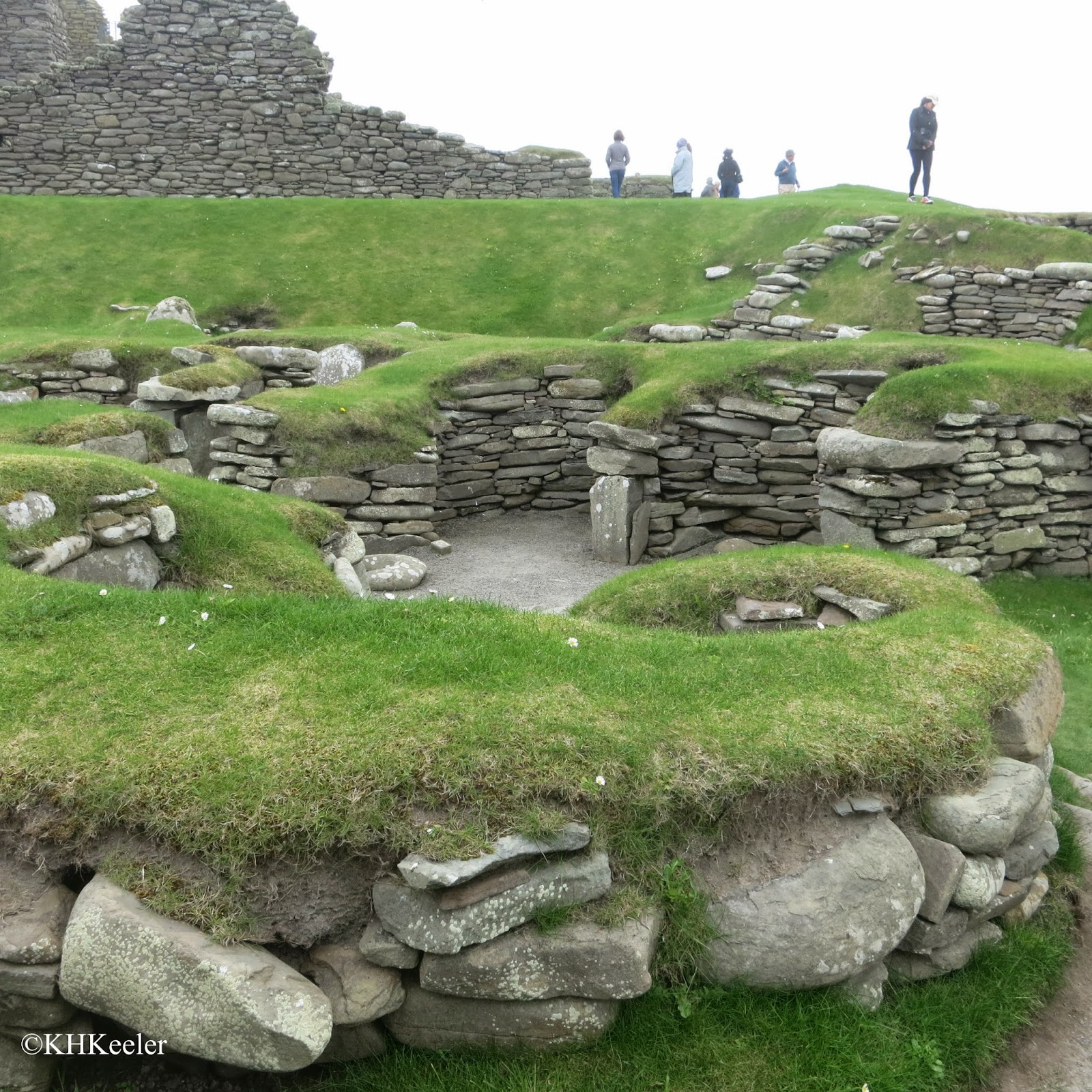
Jarlshof, ShetlandNorthern Europe has absolutely marvelous archaelogical sites dating back thousands of years. 
On Shetland I visited Jarlshof. Here, the brutal Earl Patrick Stewart built a fortified manor on the same site as a 800 BC Bronze-age village. 

Today nobody lives there, but the ruins and artifacts are from the Neotlithic (2500-1500 BC), then Bronze Age, Iron Age, Pict, Norse and Scots' settlements! (link)  

Sunday, August 31, 2014

Visiting Iceland--the Intriguing Westman Islands

Westman Islands from Iceland
Westman Islands from the seashore in Iceland
I read Icelandic history in preparation for a trip to Iceland in 2012. The Landnámabók, the Book of  Settlements, written sometime between 900 and 1300, describes that in the first year of settlement, 874 or 875 AD, Hjörleifr Hródmarsson drove hard 10 Irishmen, whom he had captured in Ireland and enslaved, making them drag the plow, as he had only one ox. The thralls (slaves) made a plot. They killed the ox and said a bear had done it. When Hjörleifr led them out hunting for the bear, the Irish thralls killed Hjörleifr and all the Norsemen who were with him. The Irishmen then took the women of the small settlement, food and weapons and fled by boat to offshore islands. 

Sunday, May 18, 2014

Plant story--Primroses, Primula--Post Script

Every subject I write about has far more information available than will reasonably fit into even two posts. (previous primrose posts 1, 2). Usually I keep it to two posts and save the rest for "someday." However, I can't resist sharing what I learned about the word thrum and the color primrose. 

First: what is a thrum?

The only place I'd ever heard the word thrum was in a graduate school botany class , for the flower form of primroses (link)--until I started weaving ten years ago. Thrums are the short ends that are cut off when a piece of weaving comes off the loom. From Dictionary.com: 1. one of the ends of the warp in a loom, left unwoven and remaining attached to the loom when the web is cut off." 


brown thrums hanging on the loom

Monday, December 30, 2013

Curious Plant Story--Cabbage Walking Canes

Walking sticks from cabbage!  What you see in the video is a stick made from Brussels sprouts.  This post is about that project and the reason for it.

I’m making a short video about the fact that the vegetables cabbage, broccoli, Brussels sprouts, cauliflower and kale are all botanically the same, Brassica oleracea (cabbage family, Brassicaceae). The oddest fact I plan to include is that in the 18th and 19th centuries, on the islands of Jersey and Guernsey in the English channel, the cabbages grew to 20' tall and their stalks were dried, varnished and used as walking sticks. LINK

People on the Channel Islands raised cattle as well as cabbages and broke off the big lower leaves to feed their cows. In the cool, moist climate--perfect for cabbage plants--the plants grew taller and taller, while people picked off more lower leaves. Since the growing season is long and the frosts light, the cabbage plants sometimes reached twenty feet tall, with big cabbage leaves at the top. They looked from a distance like palm trees. 

The stems were pretty tough, so when the plant died, the resourceful islanders found a variety of uses for them. One was to dry, smooth, and varnish the cabbage stems and use them for canes or walking sticks.  

Time and change has mostly eliminated both the giant cabbages and the walking stick industry, but they still make a few (Note: 2/1/21: having gained attention, Jersey residents are making more walking sticks. link)
Brussels sprouts
Brussels sprouts

I wanted to show a picture of the canes in the video but I wasn't sure about copyright issues on the pictures I found.

Monday, December 9, 2013

Dye Plants: Yellows from Many Sources

naturally-dyed yarns
Naturally-dyed yarns
I love color. I have knitted and woven and embroidered since I was very small. Trying plant-based dyes was an obvious intersection of my interests. Plants! Color! Wonderful! 

So off and on I will write about dye plants, even though most of the important dye plants are unknown to most people.

But dyes from plant sources are familiar. The grass stain you got on you jeans sliding into first in the neighborhood softball game? That's a basic dye found in most leaves. Leaves of many plants will produce a yellow or olive green dye. 

Monday, November 18, 2013

Visiting Iceland: A Botanist's Quick Look

Fields of Iceland
Fields of west central Iceland
In July of 2012 I visited Iceland for a week. I expected green hills and Viking-era history. I found a whole lot more.

Iceland is an island of 40,000 square miles (the size of the state of Kentucky) in the North Atlantic just barely south of the Arctic Circle. There were no humans until 860 AD when a ship from the Faroes stumbled on it. A few years later a ship captained by Raven Floki came to explore. He found it cold and dangerous and named it Iceland. Settlers arrived in 870. They spread across the land, trying to raise crops on an island with shallow soils and a short growing season. Eventually they gave up growing grains and simply raised livestock on the green fields.

Monday, November 4, 2013

Plant Story: the Quest for Fresh, Ripe Pineapples

pineapple plants
pineapple plants
The story of pineapples reminds us of a time when you couldn't zip around the globe in an airplane…
bromeliads in trees, Costa Rica
Lots of bromeliads in Costa Rican trees
The pineapples we see in grocery stores are the fruit of herbaceous plants, scientifically Ananas comosus, in the bromeliad family, Bromeliaceae. The bromeliads are almost entirely confined to the New World. Most bromeliads are epiphytes, living on trees (see photo), but pineapples grow on the ground (photo above).

Pineapples were apparently domesticated prehistorically in South America and dispersed throughout all tropical America in very ancient times. 

pineappleThe native people of Guadalupe, and other Caribbean islands, considered sharing pineapples a symbol of hospitality. When Columbus landed on Guadalupe on his second voyage in 1493, they offered him pineapples.

Columbus and his men thought the pineapples were delicious. Columbus called them "pine of the Indies." The men in his crew and subsequent Spaniards called pineapples piña, from "pine" in Spanish. Apparently because it reminded all of them of a pine cone. The name piña or pine for pineapples carried over into English initially. In 1633, Gerard called it the pinia or pine thistle in his Herball. (It was not included in the first edition of the Herball in 1599, the one you can find online). 

John Worledge is given credit for saying the fruit was "like a pineapple" in 1676. At that time, the word apple was used for any fruit, so a pine apple was the fruit of a pine tree, today called a pine cone. That name stuck, replacing pine of the Indies, pine thistle and older names. Despite the shared names, pineapples are obviously not much like either pines or apples.

Monday, September 23, 2013

Visiting China: Autumn Greetings, Chrysanthemum and Maple

red chrysanthemums
red chrysanthemums 
     As summer fades into fall, a different set of plants dominate the landscape.  In my garden, the chrysanthemums that were an unassuming cluster of leaves all summer are now covered in blossoms.  My fruit trees are dropping apples and haws. Burning bush (Euonymous) and maples start to turn color. 

   My garden is in Colorado but those are Chinese plants or plants also found in China. In the late 1800s and early 1900s "plant hunters" searched east Asia for garden plants. Many familiar garden plants--lilacs, peonies, ever-blooming roses, nandina, butterfly bush--are native to China, introduced to the West by the plant hunters.
Chrysanthemums along the wall, Suzhou, China
Chrysanthemums along the garden wall, 
Suzhou, China

The Chinese  Chrysanthemum

   Traditional Chinese culture noticed the progress of the seasons and cherished it. Plants were associated with seasons--plum blossoms in spring, orchid in summer, chrysanthemum with fall, bamboo in winter--to name The Four Gentlemen, also known at the Four Plants of Virtue. The right plant for the season was important. Having plants out of season brought bad luck. 

Monday, August 19, 2013

Plant Story: Chocolate, Food of the Gods

Theobroma cacao tree, cacao
Theobroma cacao tree, cacao 
    No doubt you know the story of chocolate.  My two favorite parts of the story are that it started out being drunk spiced with chilis, and that the name had to be changed.

  Chocolate is made from the roasted seeds of a small tree, Theobroma cacao, in the plant family Sterculiaceae.  It is native to the New World tropics, requiring warm temperatures (never below 60 F/ 16 C!) and plenty of rain. Big pods form on the branches of the tree. Unlike familiar temperate zone fruit trees, the flowers and then the fruit (pods) of cacao come directly from the branches, not off little stems. That is probably important, considering that cacao pods are as big as grapefruits.  


Monday, April 22, 2013

Plant Story: Common Dandelions of the World

dandelions, Masonville, Colorado
dandelions, Taraxacum officinale, Colorado, USA
dandelion, Waimea, Hawaii
    Dandelions, Taraxacum officinale (sunflower family, Asteraceae) are recognized as the quintessential weed in the United States. They are persistent lawn weeds known to just about everyone, at least in the eastern 2/3 of the United States.

    Everyone hates dandelions. Enormous amounts of time and energy have been spent killing dandelions.

     Dandelions haven’t always been weeds. They were almost certainly brought to the United States intentionally as a food plant. The leaves are edible, eaten raw like lettuce or cooked like spinach. 

Monday, April 15, 2013

Botany Rules 2. Scientific Names, Genus and Species

prickly pear cactus
prickly pear cactus
 As every basic biology class explains, scientific names were created to organize communication about plants and animals. In the 1500s and 1600s, Europeans spread out over the globe and brought back all kinds of unknown organisms. By the early 18th century, they had chaos--lots of organisms and no system of organization. 

Ipomoea pes-caprae, Padre Island, Texas
morning glory, Padre Island, Texas
Ipomoea pes-caprae, Jamaica
morning glory  Happy Grove, Jamaic
    Here’s a purple-flowered morning glory from the beach in from Jamaica and in Texas. Same or different? 

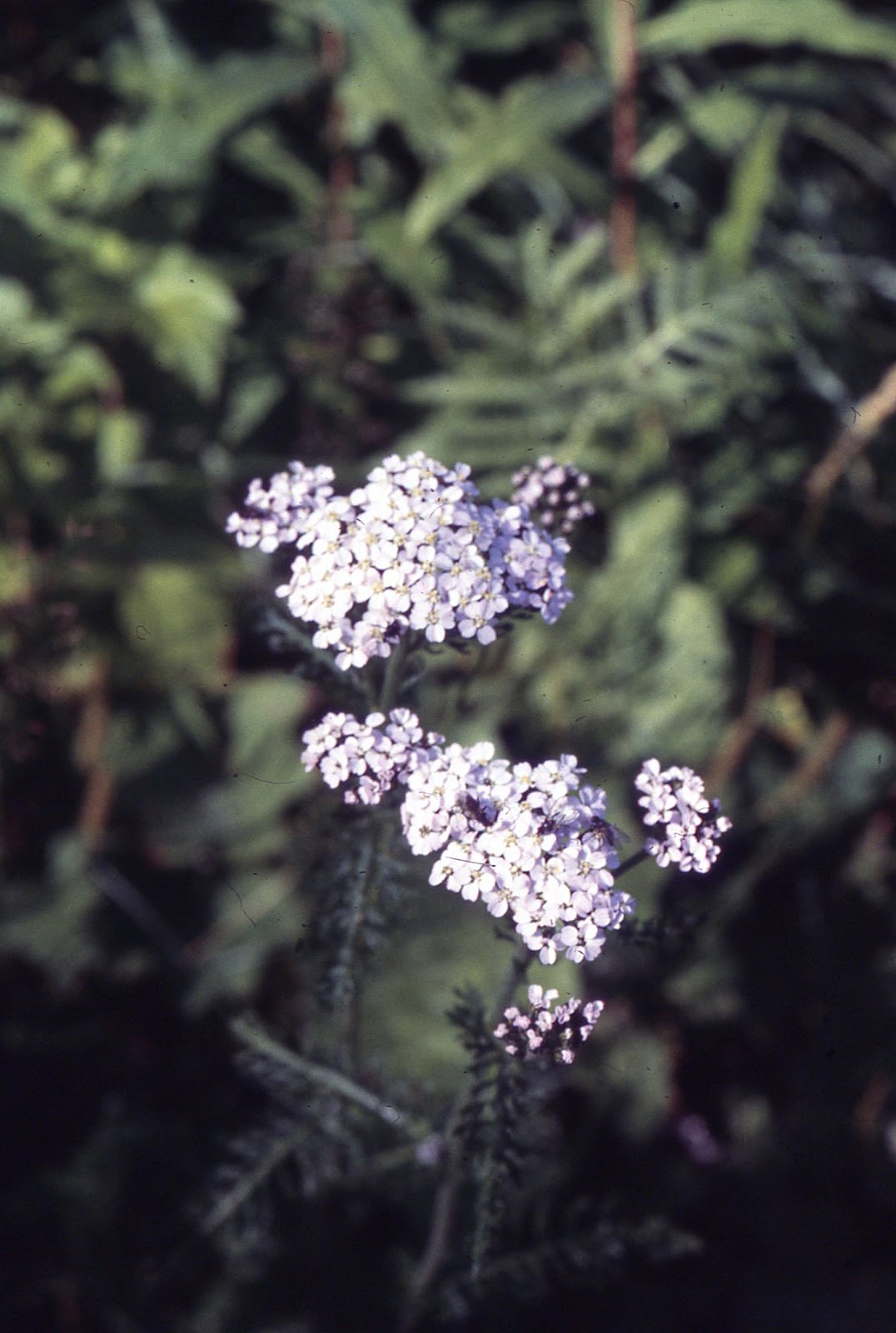
yarrow, Boulder Colorado
yarrow, Boulder Colorado

Yarrow from Narvik, Norway and Boulder, Colorado. Same or different?


yarrow, Narvik Norway


     Linnaeus set up a hierarchical system: groups are made of subgroups made of more subgroups. It was logical and mostly it worked. His hierarchy was Kingdom, Phylum for animals/ Division for plants, Class, Order, Family, Genus and Species.


Monday, April 8, 2013

Related and unrelated plants: Sweet potatoes, morning glories and yams

sweet potato, Ipomoea batatas
   The sweet potato, Ipomoea batatas, is a morning glory, because it is in the genus Ipomoea and lots of its close relatives are called morning glories. It looks a lot like the weedy morning glories that annoy gardeners in the U.S. South. It has pale flowers with purple centers that open early in the morning and close by midday. It is a vine, with, originally, more-or-less heart-shaped leaves. 

sweet potatoes, cooked
    Sweet potatoes are native to the Americas, where they have been cultivated for millennia. They were probably one of the earliest domesticated plants. Sweet potatoes have been found at sites in Peru dated to 8,000 - 10,000 BC. They were in widespread cultivation in both Mexico and Peru by 2500 BC. 

     Today they are grown around the world. 

sweet potatoes with ornamental red leaves
Sweet potatoes with ornamental red leaves


  Columbus encountered sweet potatoes and took them to Europe. 

Friday, February 15, 2013

Plant Story: Not Always Just Plain Vanilla

     Good vanilla is one of my favorite flavors, and the idea of "plain vanilla," vanilla as the no-flavor flavor, has always been somehow annoying.  And it wasn't always the case.

Vanilla orchid
The vanilla orchid is the plant in the middle,
hanging down over the tree branch. (In the
Conservatory at the Smithsonian in
Washington D.C.)
   Vanilla is native to the Americas and although probably in use for millennia there, it only reached Europe after 1492. At that time it was a rare and highly desirable flavor.


   Vanilla comes from “beans,” long thin bean-like pods, but vanilla is not at all a bean (legume, plant family Fabaceae), but an orchid (plant family Orchidaceae). In fact, it is the only orchid used as a food, or used by commerce in any other way than as ornamentals (flowers) even though there are more species of orchids than species in any other plant family, legumes and grasses included.  

   Vanilla is a climbing vine with fleshy leaves longer than my hand, but 2-3 fingers wide. We grew a vanilla orchid in the greenhouse at the University of Nebraska. It climbed up to the ceiling. Then its stem connecting it to the pot broke, so the plant was hanging from the wall and ceiling without being rooted in soil at all. It lived like that for years. And that was fine until we wanted to move it...which is of course one function of flowerpots, mobility.


      The flowers of the vanilla orchid are cream-colored recognizable orchid flowers ( vanilla flowers on Google).  The fruit develops as long dark pods.